Holding StillPortrait Artist John Burke on Capturing Soul
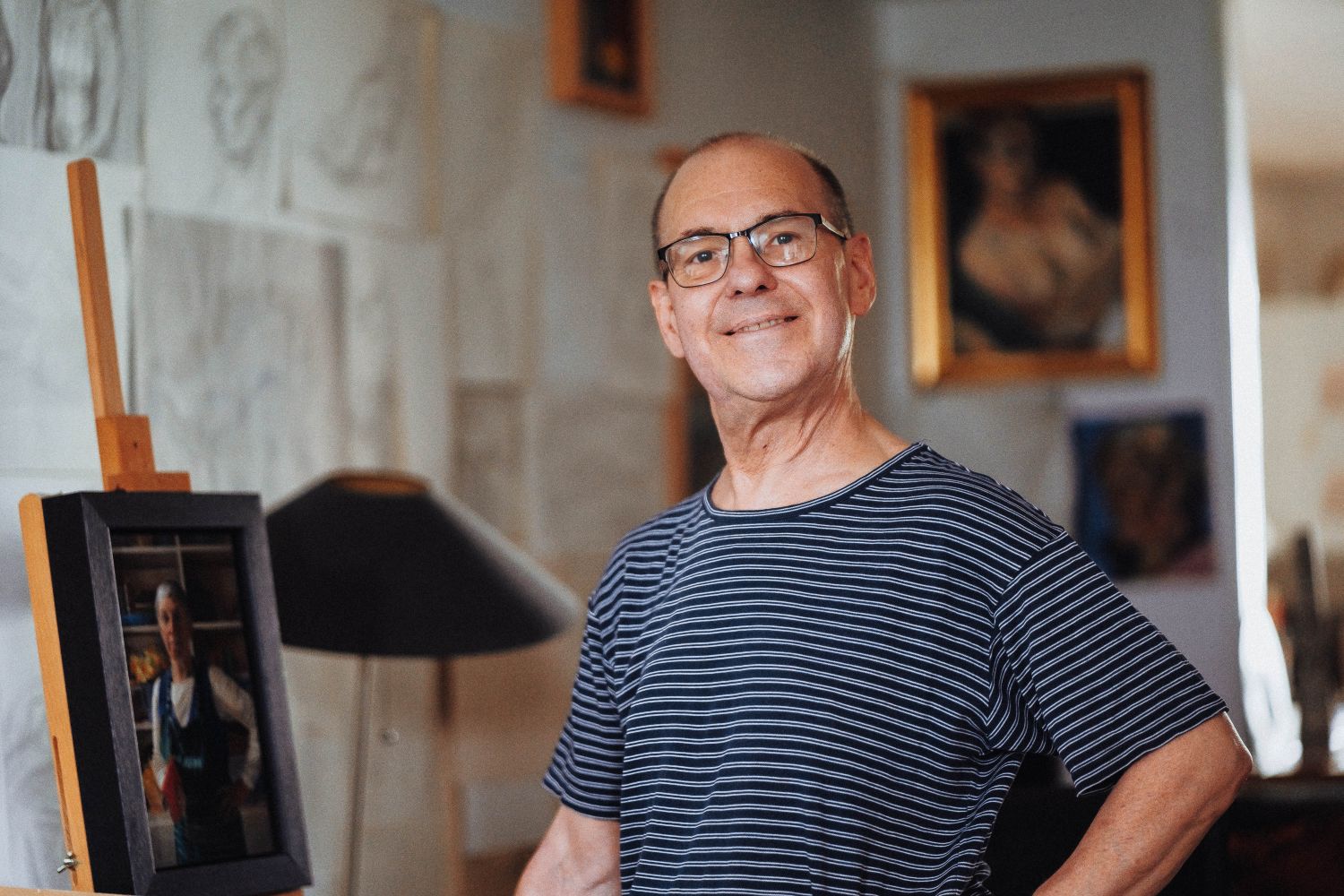
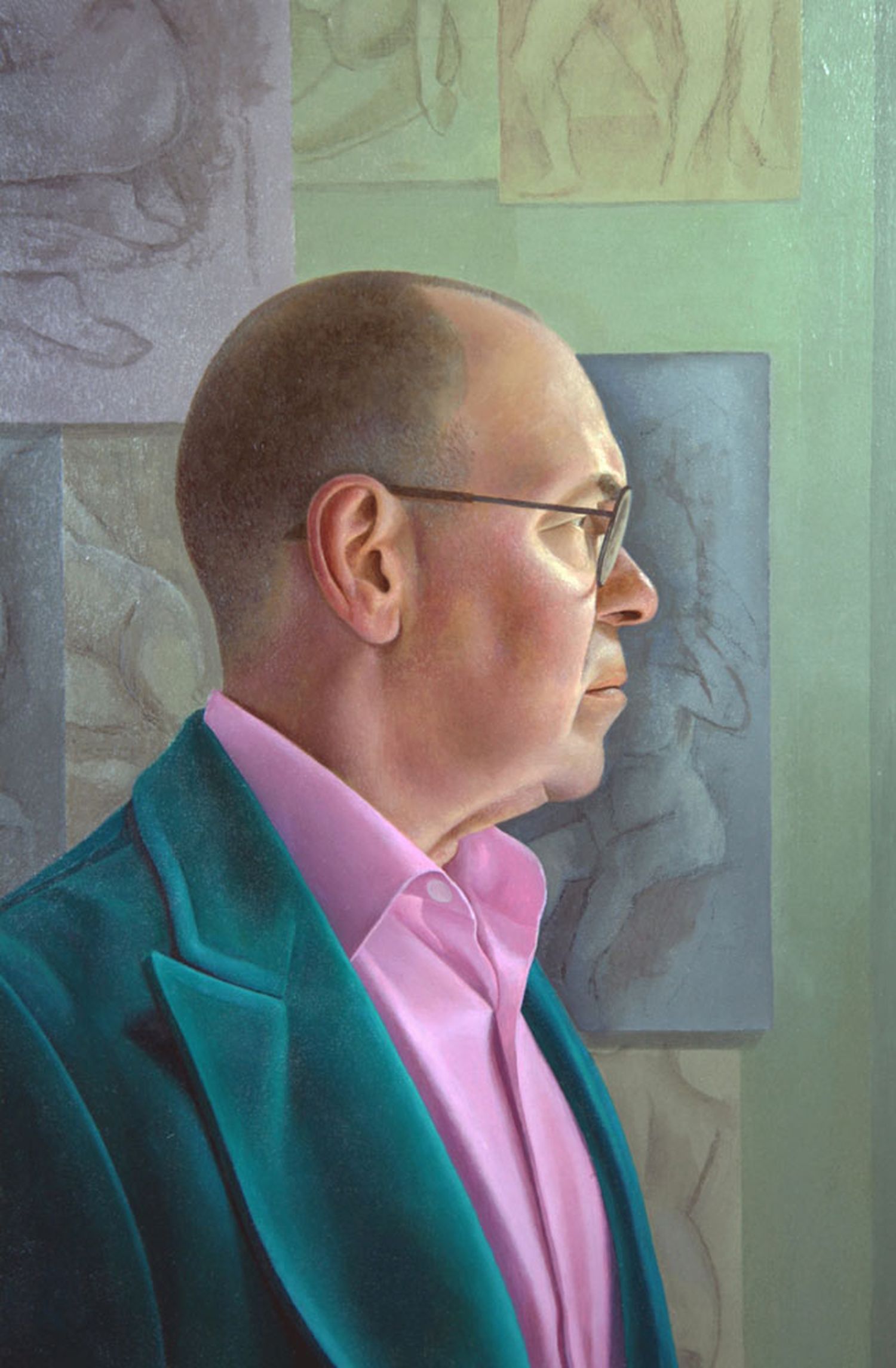
This portrait of Glyphics’ founder, the late Brian Heppell, was painted by John Burke - an artist whose approach felt aligned with the way Brian thought about craft. Below is the conversation we had with John while he was still working on the painting, offering a glimpse into how he works and why his portraits feel less like records and more like recognitions...
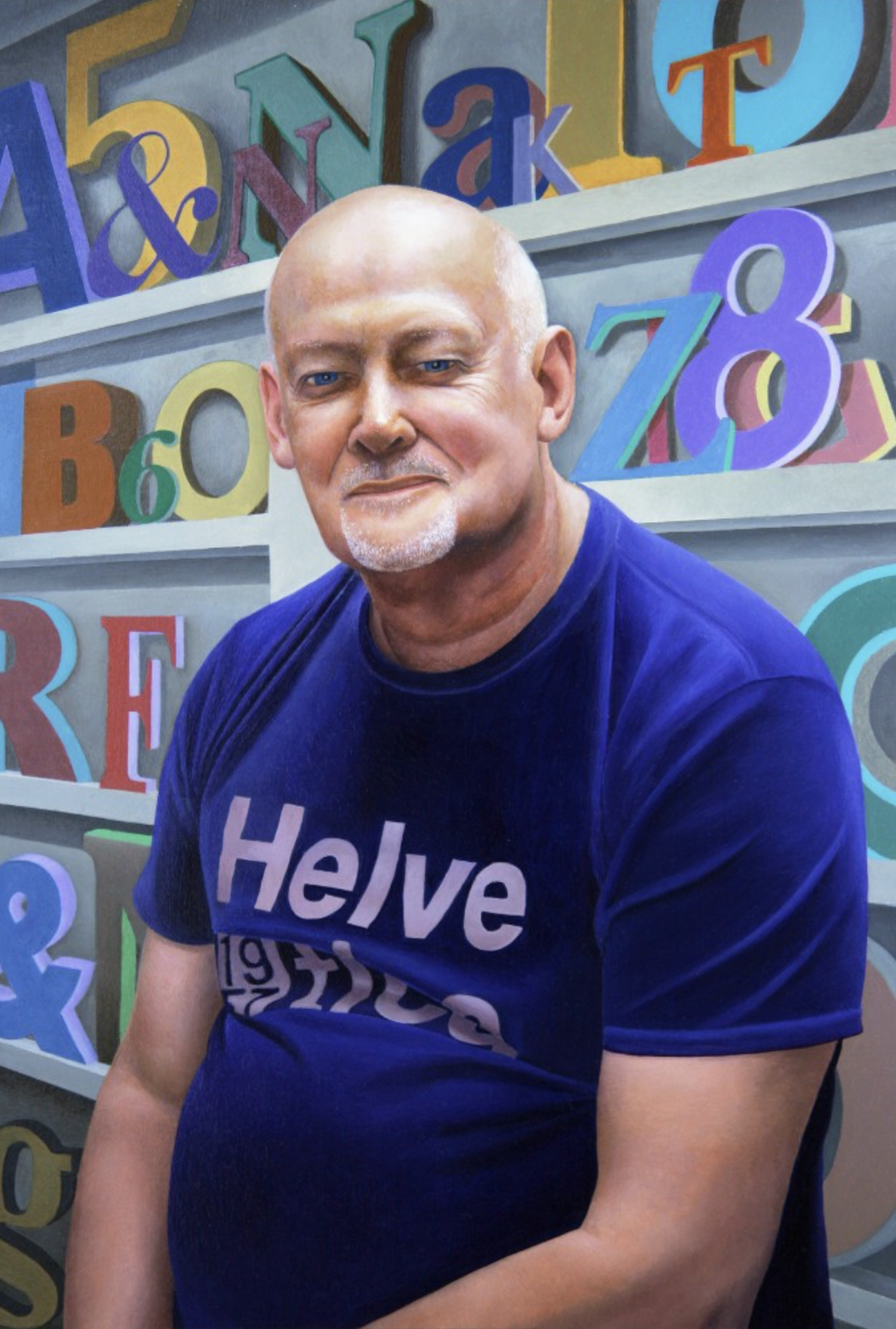
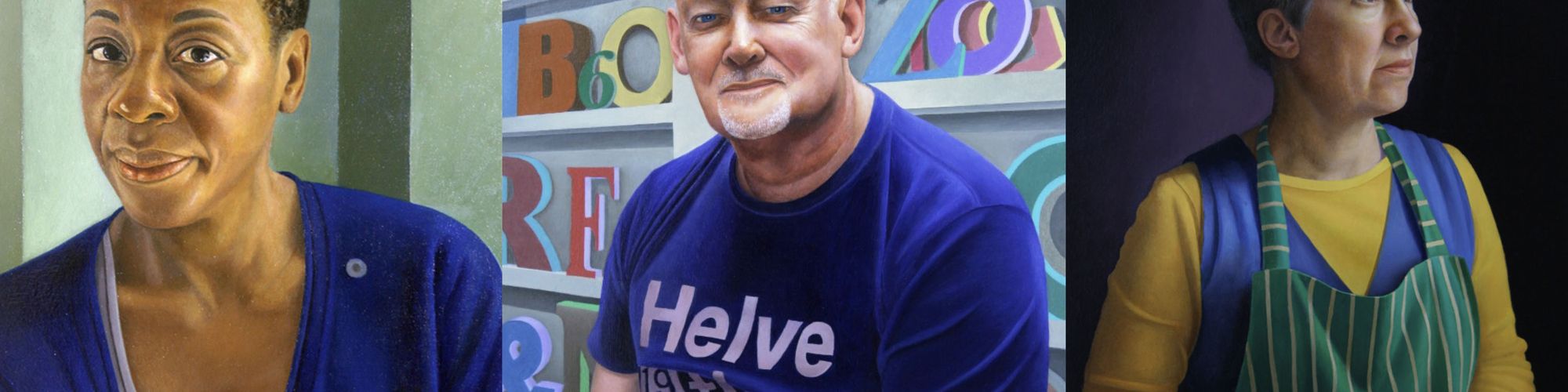
A Man of Letters, oil on panel, 40 × 27 cm
John Burke has little interest in performing the role of "artist" and a great deal of mischief about him. There's a sense of irreverence where others might offer airs, graces or theories. He simply begins with people. “If it hasn’t got the soul in it,” he says without hesitation, “it’s crap.”
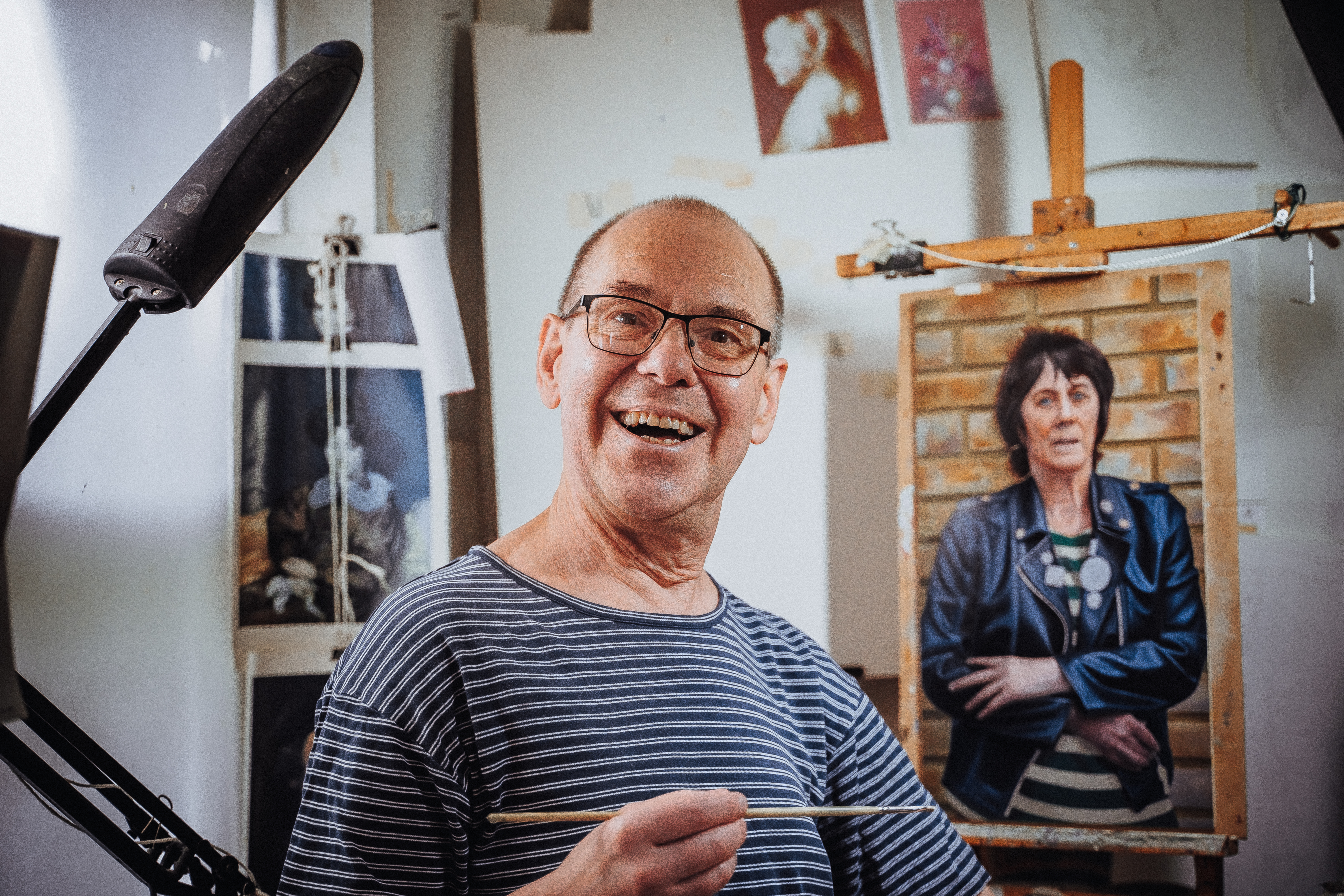
For John, a portrait isn’t a technical exercise or a demonstration of skill. It’s an act of attention, an attempt to recognise something essential in another person and hold it long enough to make it visible to someone else. He approached Brian in exactly those terms and chose our workshop as the setting for the portrait.
Brian began his career as an apprentice typesetter at The Times, went on to establish London signmakers Glyphics (then also a vintage lettering shop) and later spent his retirement practising calligraphy. He was obsessed with typographic forms: their weight, their spacing, their balance, their physical presence - the same principles that still guide our craft today.
To put it mildly, Brian loved collecting letters, feeling them in his hands and seeing them built from different materials into three dimensions. So John knew this was never a man to be flattened into a likeness.
The portrait carries that sensibility: bold yet quietly assured, attentive and composed. It feels inhabited. And to understand how John arrives at that depth of work, you have to understand how he learned to look.
On Being Drawn to Drawing
John’s route into painting was not straightforward. “I always drew as a little kid,” he says. “That was the thing.” Which is why it surprised even him when, at secondary school, he began to imagine a different future. He threw himself into science, becoming, in his words, “a bit nuts” about lining up the right subjects and discovering he was good at them. For a while he seriously considered medicine, although drawing never really disappeared. “In the middle of all that,” he says, “I was still going to the art room and painting and things.”
The shift came during sixth form, prompted by a young teacher-in-training who took the time to look closely at his work and asked a simple question: had he ever thought about art school? John hadn’t, but the idea stayed with him. It led him first to a foundation year at Hornsey, now part of Middlesex University, and then to graphic design at Central Saint Martins, where he found himself facing a familiar crossroads between creative instinct and practical survival.
“I didn’t know whether to do painting or graphic design,” he says. The answer, at least in the short term, was given to him plainly. His tutor, a painter himself, advised him without sentiment. “He said, ‘You’ll never make money from painting. Be a graphic designer.’” John followed that advice, not as a rejection of painting, but as a way of making space for it to exist alongside everything else.
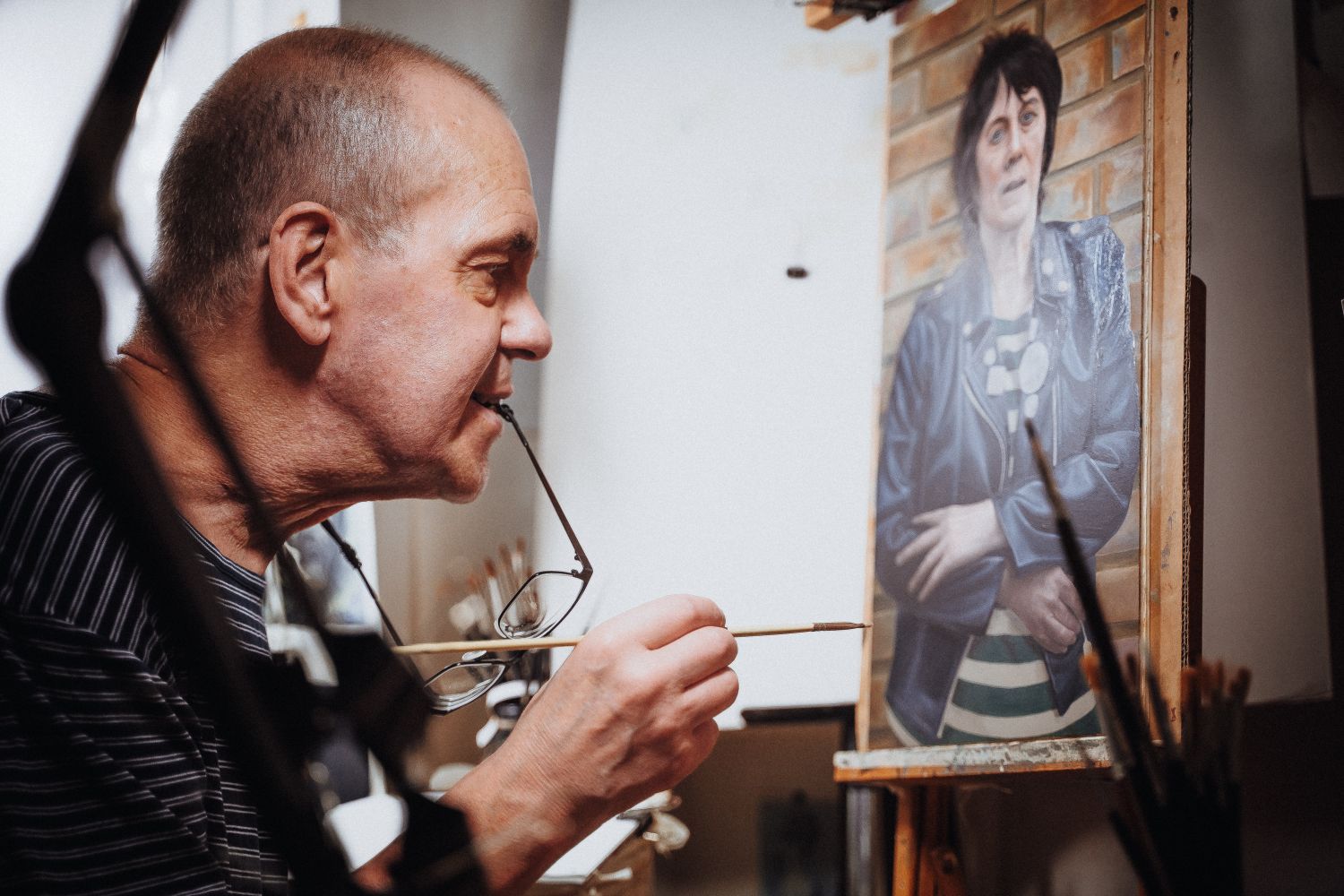
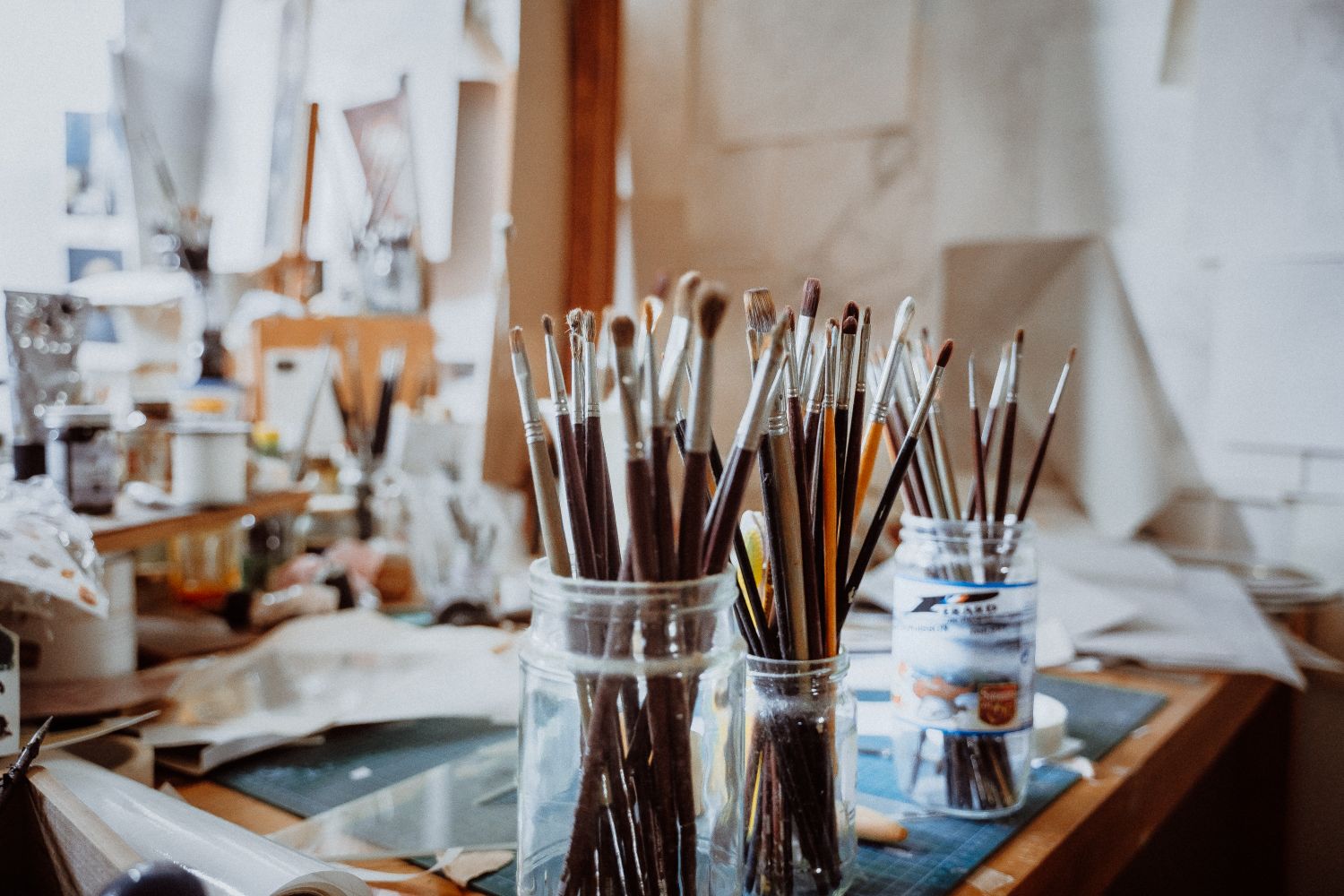
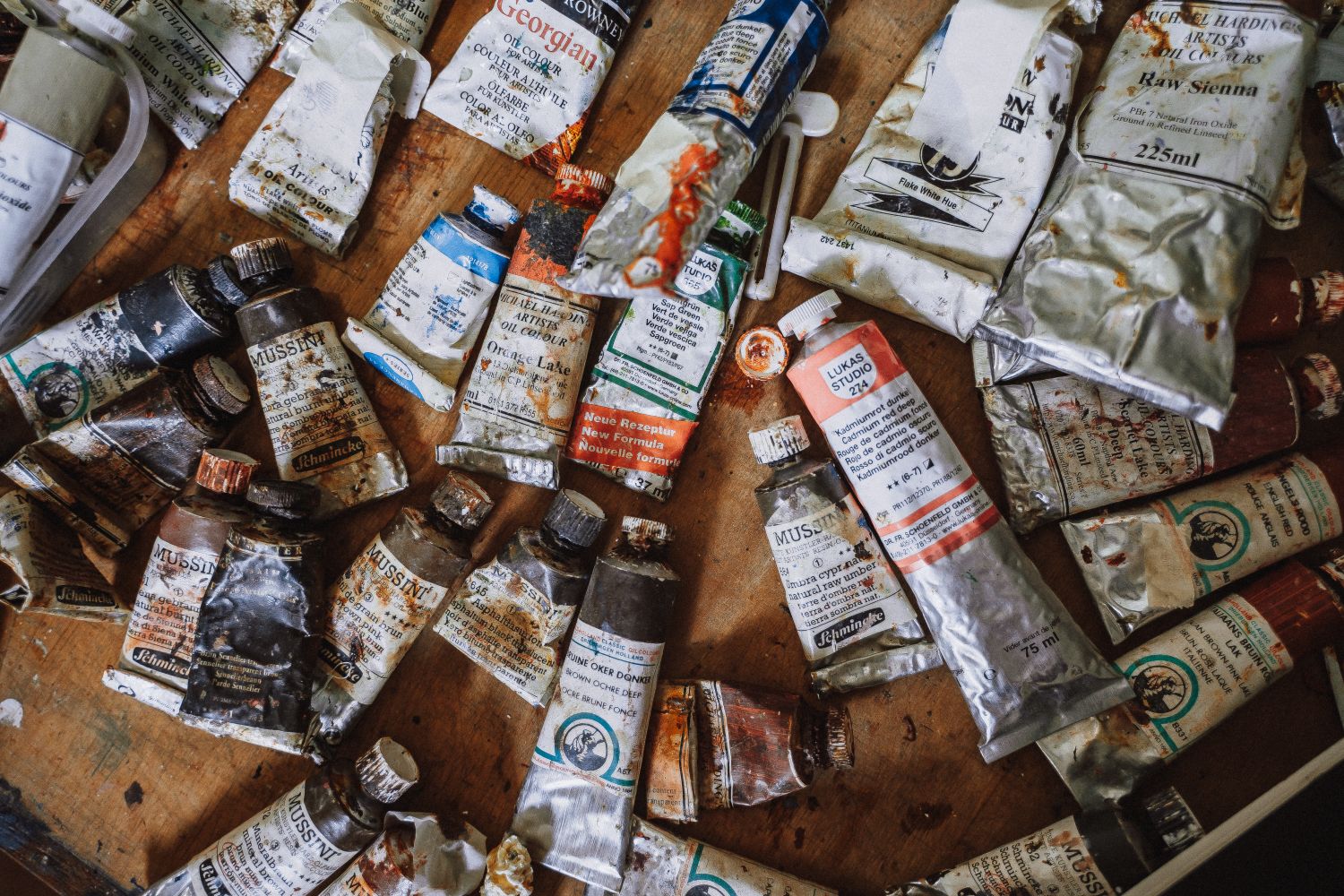
Bills or Brushes
Graphic design paid the bills, but painting didn’t, not at first. John built what he describes, without much drama, as a parallel life, working in design studios, teaching in schools and universities, and taking on commissions for educational publishing and television while continuing to draw quietly alongside it all. It was something constant rather than career-defining.
“When I was at college we used to have to do life drawing,” he says. “We all absolutely hated it.” Reluctantly, it became central to the way he worked. Over time, he returned to life drawing repeatedly, not as a source of inspiration so much as a way of sharpening how he sees, a discipline he describes as “keeping the eye honest.”
Going into teaching at an early stage of his career, before taking on many personal or financial responsibilities, gave John a certain freedom. It allowed him to experiment, step sideways, and walk away from work that no longer felt right. “If I got fed up with something,” he says, “I’ve got no family, wife, mortgage… I’m quite prepared to put myself on the line. Because there’s nothing to lose.” By the early 2000s that attitude had hardened into something more decisive.
A serious illness earlier in his adult life had compressed time and stripped decisions back to what mattered. Looking back, he remembers the clarity of that moment. “I thought, well… I’m here now,” he says. “So I might as well do what the hell I like.” In 2002 he stepped away from graphic design and committed himself fully to painting. A year later he completed the Drawing Year at the Prince’s, now Royal, Drawing School, by which point drawing was no longer something that sat alongside his life but something that shaped it entirely, the habit and urgency of it settling in as something permanent.
Paintings vs Pixels
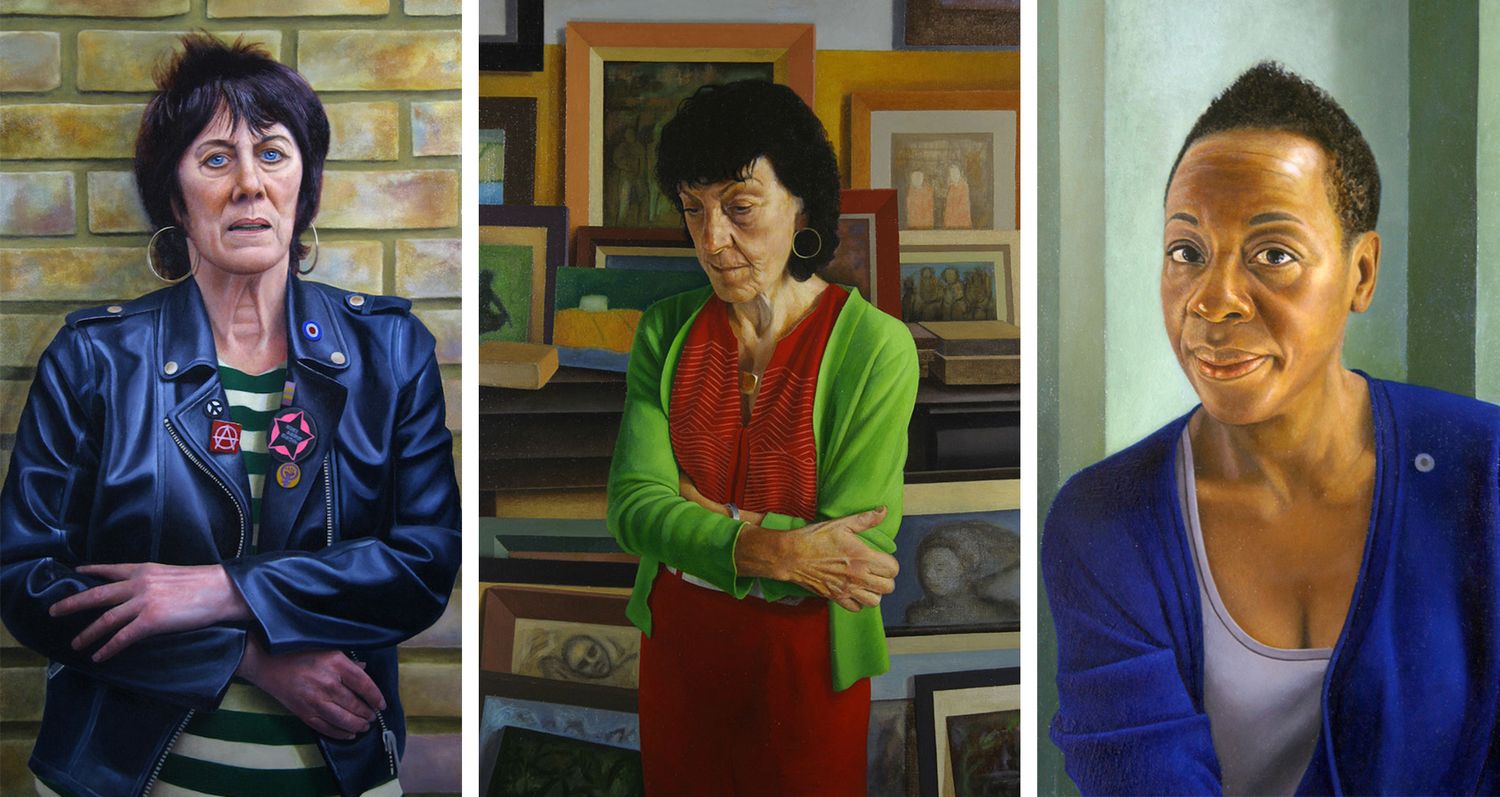
John’s paintings often read as realist, although realism itself is not the aim. He is clear about his resistance to photographic imitation. “I don’t want my paintings to look like photos,” he says, bluntly. What matters instead is observation rather than replication, and drawing from life remains central to his process even when photographs are used later as reference. It is, as he describes it, a way of building a visual vocabulary. “You learn how to see,” he says. “And once you’ve got that vocabulary, you can use it.”
That vocabulary reveals itself most clearly in his portraits. Faces are carefully structured while backgrounds tend to loosen and open outwards, allowing objects to emerge not as decoration but as biography. A jacket can hint at a former life, a book can suggest habit or memory, and a shelf of letters can become a language of its own.
“You’re trying to understand who they are,” he says. “Not just what they look like.”
For John, learning to see is inseparable from learning what to leave unsaid and what to deliberately include within the frame. Ever the apprentice, it is a skill he has shaped through spending time in close proximity to the work of other painters, getting near enough to understand how they hold attention, and how the very presence of a viewer - especially an artist like himself - can reshape meaning.
Learning to look
John’s resistance to the photographic is reinforced by the way he spends time in galleries - not browsing, but standing. He returns repeatedly to early Renaissance and Baroque painters such as Van Eyck, Memling, Velázquez and Leonardo, not in search of influence so much as companionship, treating their work as something to be experienced directly rather than interpreted through reproduction.
Sometimes that looking involves a small act of mischief. He describes arriving early, glasses off and catalogue in hand - standing just convincingly enough that people assume he belongs there. When the doors open, he slips inside, gaining a few quiet minutes alone with the work.
“You suddenly realise you’ve got five or ten minutes with a painting,” he says. “Just you and it.”
That habit of patient observation inevitably returns him to his preferred subject as a painter: people. Reproducing a person, he believes, flattens experience, while being present with them restores depth, allowing the painting to emerge as something closer to lived experience than simple resemblance.
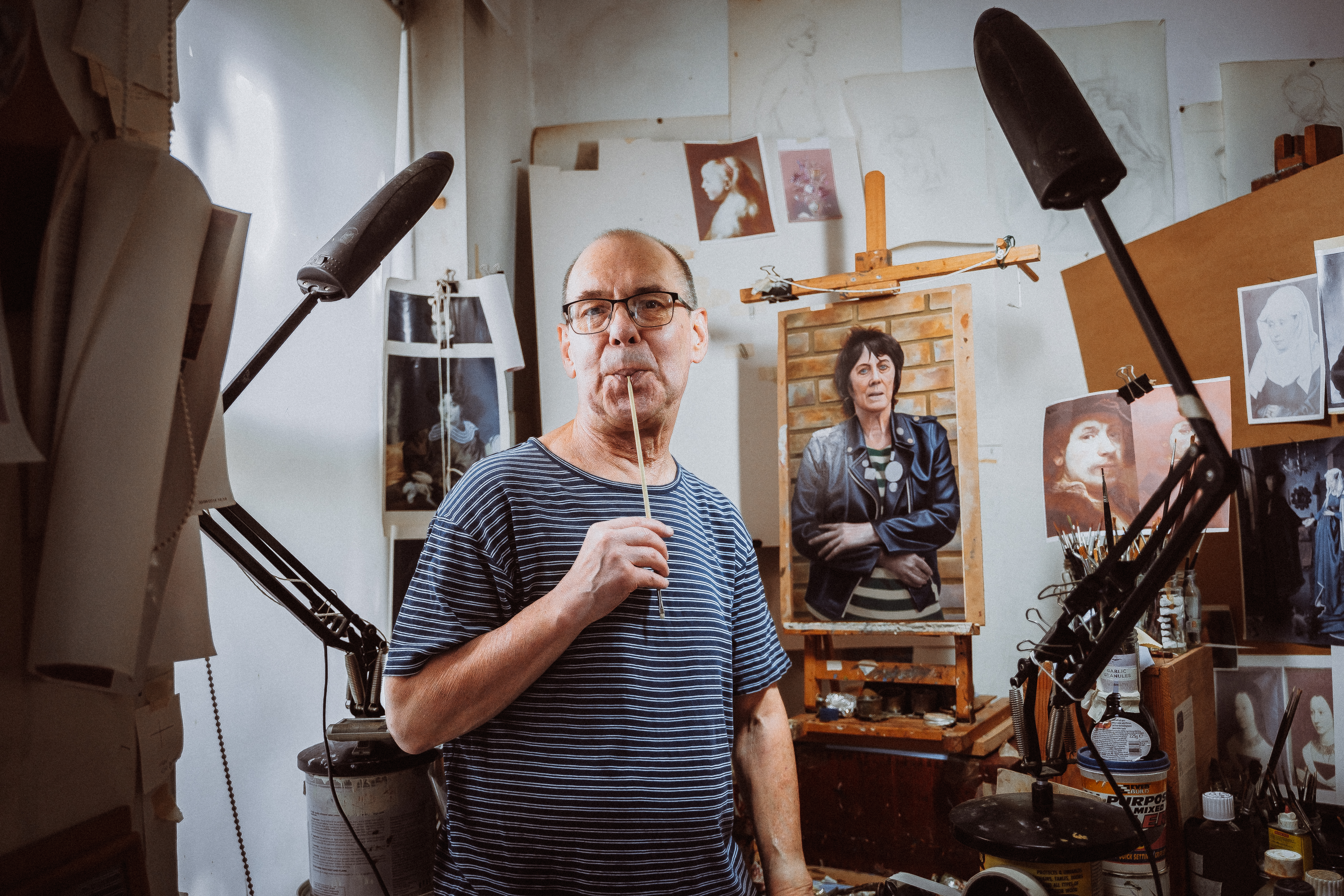
Soul Searching VS Still Life
John is drawn to people. “I like people,” he says. “They’ve got that thing, that soul.” Conventional beauty, though, holds little interest for him. “Beauty is completely overrated,” he says. “There’s nothing unique about it.” What draws his attention instead is specificity: a scar, a stance, an unforgettable profile or just the way someone holds their hands.
Portraiture, however, is only one part of how he sustains his practice. Still life sits alongside it, not as a lesser subject, but as a way of refining the craft that allows him to return to portraiture with sharper focus.
Built from simple arrangements, everyday objects, restrained palettes and controlled light, he sees still life as simpler because it removes the unpredictability of human presence. “It doesn’t move. It’s just about colour and shadows.” That simplicity makes it a useful discipline though, allowing him to concentrate on structure, tone and balance - keeping the mechanics of painting strong.
For him, still lifes rarely operate symbolically; instead, they remain firmly observational. And it's that practise of scrutinising that brings the discipline closer to portraiture. Objects are examined with the same patience and curiosity he gives to a sitter, reinforcing something central to his practice: the subject is never the thing itself, but the act of looking.
His still life work ultimately feeds back into his deeper interest in people. People remain the greater challenge. “It’s easy just to do a picture of somebody,” he says. “Capturing their soul - that’s the challenge.”
Often, that character reveals itself not in the face alone, but in smaller gestures that quietly ground the composition - details that can hold as much emotional weight as expression itself.
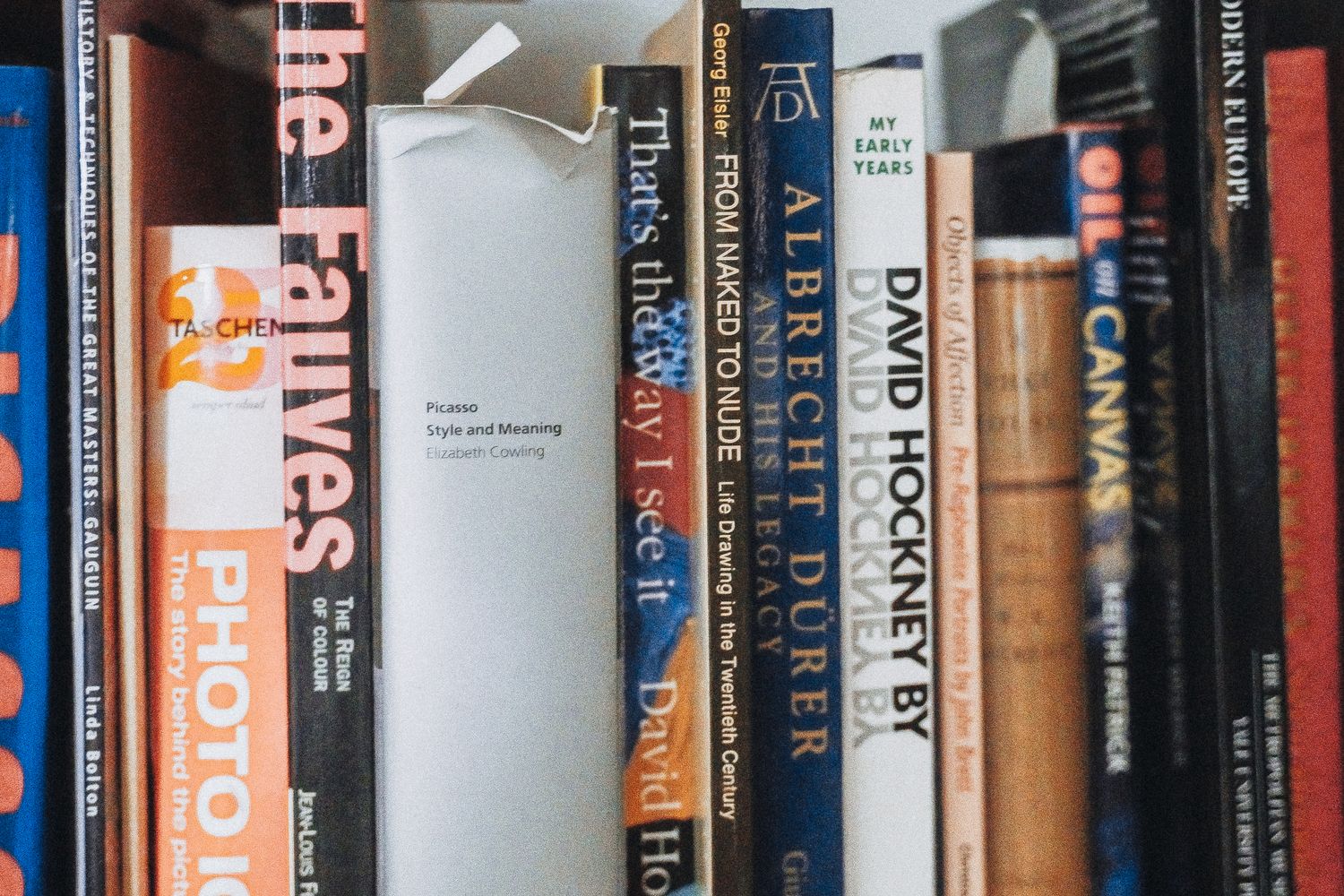
Honing in on hands
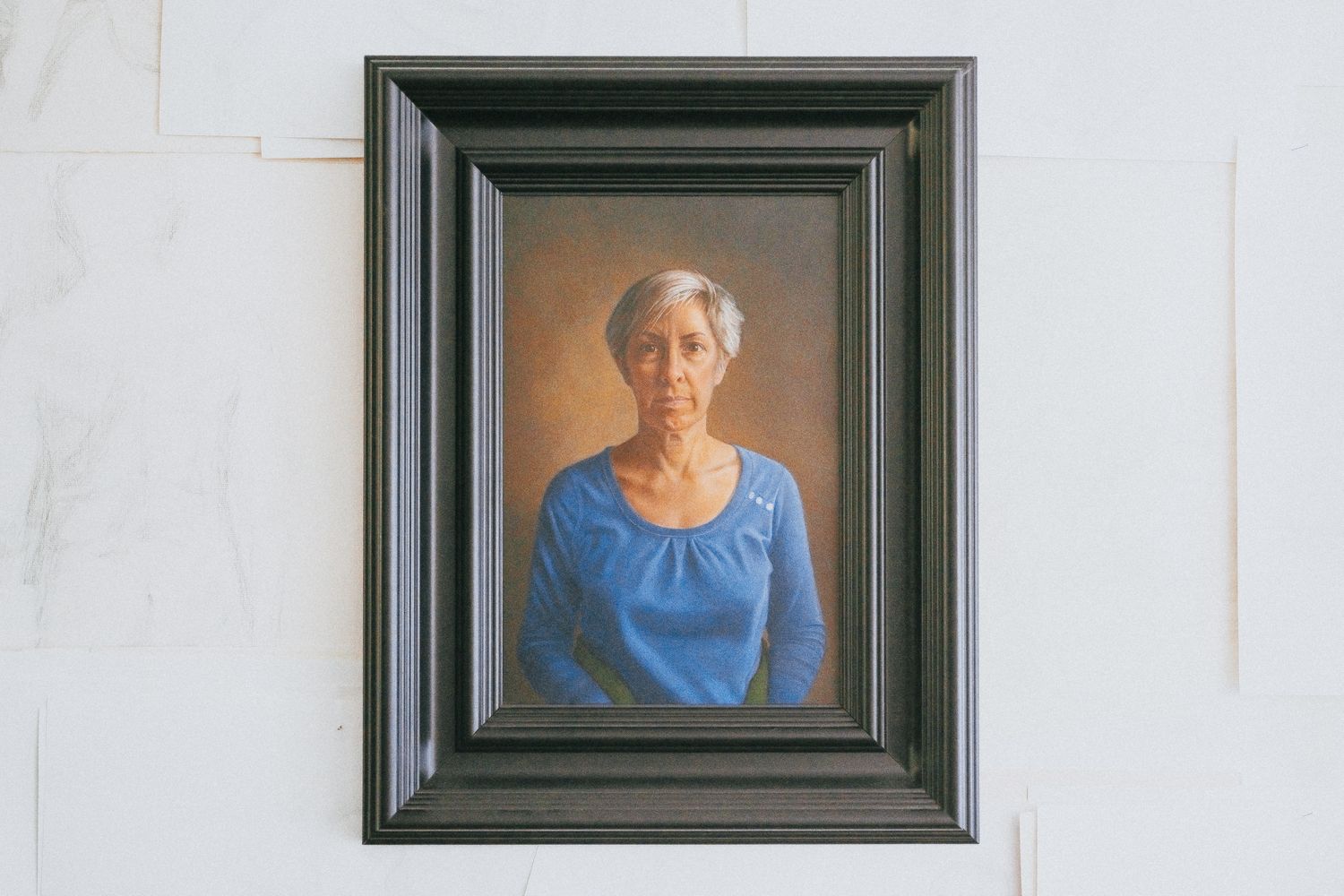
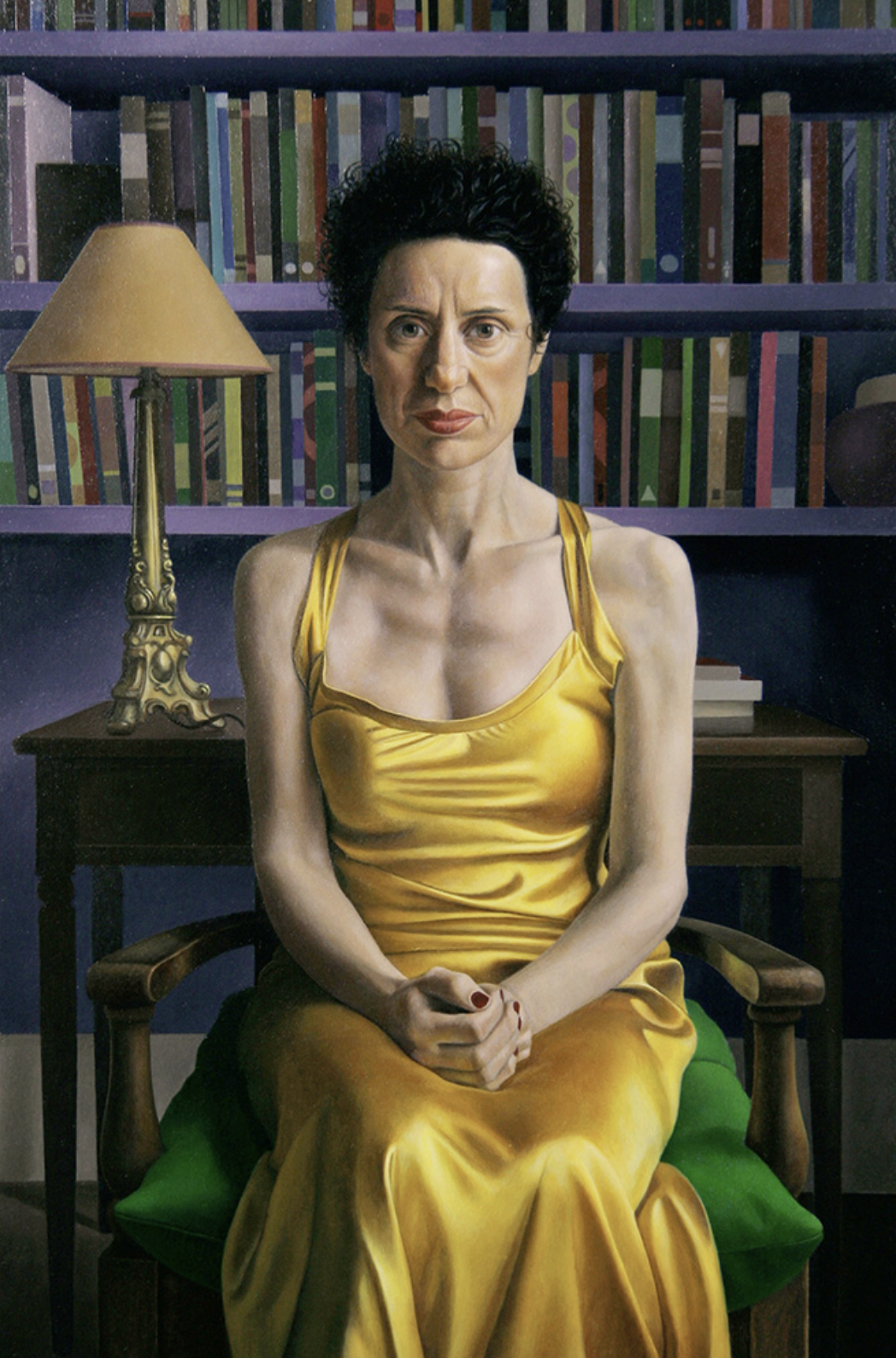
One detail that becomes increasingly visible across John’s portfolio is his attention to hands. They recur throughout his paintings, sometimes clasped, sometimes resting, sometimes holding books or objects, and occasionally holding nothing at all. They are never decorative. Instead, they operate as emotional anchors within the work.
Hands reveal age without sentimentality; suggesting tension, calmness or memory through posture alone. They allow John to convey depth without resorting to theatrical expression, offering a quiet through-line that connects many of his portraits. As he puts it, when he notices something genuinely distinctive, he knows the painting has a place to begin. “If I can see something unique,” he says, “then I know it’s going to work.”
Subjects That Carry Time
“I’ve only been painting older people recently,” John says. “Partly because those are the people I know,” and partly, he admits, because of a practical dimension that has gradually revealed itself. “Yes, I’ve got a niche market of sons and daughters who want a painting of their dads or mums before they die.”
He speaks plainly about this, but with understanding. “When people get to that stage,” he says, “they want something held still.” It is that sentimental aspect that resonates with him. As he puts it, “old boys, old girls” carry time differently - their hands and faces marked, expressive, resistant to smoothness. For a painter drawn to character rather than conventional beauty, they offer depth and complexity. “They’ve got something,” he says. “It’s all there.”
These portraits are rarely made simply for display. More often they are acts of preservation and remembrance. “You’re not just doing a picture,” he says. “You’re trying to understand who they are.” And recognition, rather than likeness, becomes the measure of success.
Slow art, statement art
John works with both acrylic and oil, often within the same painting, using each medium for what it offers structurally. Acrylic provides speed and clarity, allowing him to build foundations quickly, while oil extends time, making it possible to return, adjust and reconsider. “Acrylic dries really quickly,” he says. “Oil lets you go back and move things around.”
Colour is treated with similar balance. John does not avoid primary hues, but grounds them through shadow so they feel natural rather than muted. Bright tones are deepened by atmosphere instead of softened into neutrality. In portraits such as Brian’s, or in his painting of Pen Vogler (below), colour remains clear and present, used with the same deliberation as line and form - not superfluous, but purposeful.
That extended process leaves space for uncertainty, which he treats as essential rather than problematic. Paintings are frequently revised, scraped back and rebuilt as decisions evolve. “Sometimes you have to rub it off and start again,” he says. Failure, for John, is inseparable from progress. “Mistakes are gifts,” he says. “You learn much more from them.”
On Being Boxed In
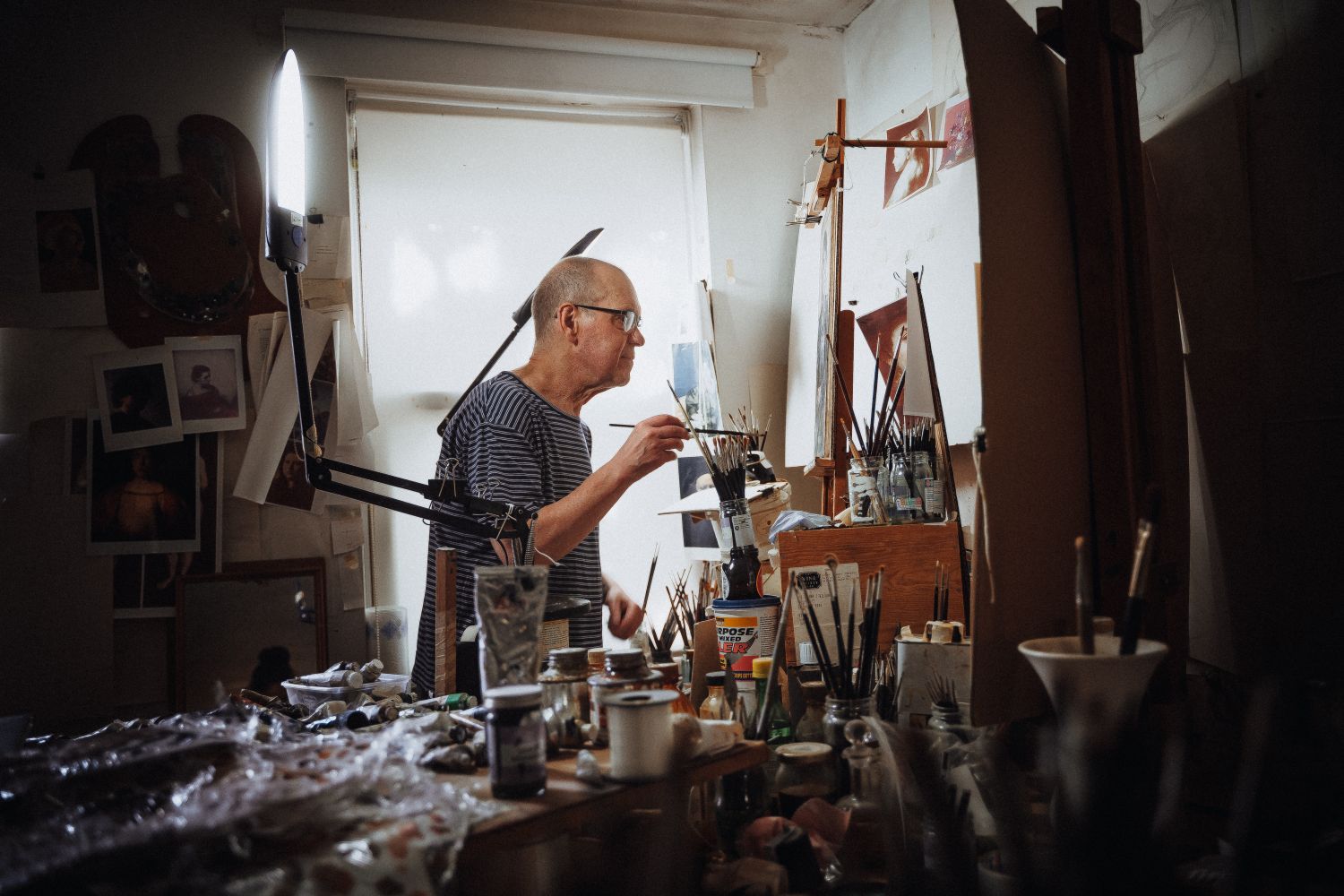
John paints in a small, near-windowless, virtually signal-proof studio which he refers to as “the box,” a place he values precisely because of its limitations. “I like being in a confined space,” he says. “I don’t want to see what’s going on outside.” Music fills the room instead. Headphones on. Lights down. A single lamp becomes the only focused source of light, isolating the work from unwanted distraction.
He describes the experience as almost theatrical without being performative. “It’s like being in a spotlight,” he says. “You shut the world out.” Although he speaks about painting with seriousness, there is little sense of solemnity. The Box allows him to concentrate without ceremony, treating the act of painting as both disciplined and quietly absorbing.
It is within that contained focus that portraits like Brian’s begin to take form.
Crafting a craftsman
The portrait of Brian is set inside Glyphics itself - the place he built and worked in for decades, and which recently marked forty years since its founding in 1985.
When John began the painting, he understood immediately that the background of letters mattered as much as his subject's features. It was not decoration but environment - part of the way Brian existed in the world - and it demanded the same care as the likeness itself.
Typography rarely tolerates vagueness. It does not need to be exact, only right. Spacing matters. Balance matters. Meaning lives in detail, and in that sense it sits close to portraiture. John approached the painting with the same attention and restraint, allowing the forms around Brian to feel constructed rather than just illustrated.
The result is not showy, nor does it need to be. The painting does not imitate a photograph; instead it feels more present than one - sharpened by selection. A purple-blue draws you to Brian’s piercing gaze, while a quiet cast of green lends the moment intimacy. Contrast is softened by tone, edges are deliberate, the figure in focus, settled in his surroundings as if the room has adjusted itself around him. It becomes less a likeness than a recognition: a man at ease inside the world he helped create, held still in a scene that still lives on downstairs in the workshop today.
When John speaks about what he hopes for in a painting, he puts it simply: “I want that ‘wow’… something that gets under your skin.”
Always learning
For all the assurance in his work, John doesn't speak as a painter who feels finished mastering his art. In his late sixties, he talks in terms of curiosity, not certainty. “I think I’m finally starting to understand what painting is,” he says. “Which is a bit late.”
There is pleasure in that admission, not regret. He still relishes navigating the terrain between observation and interpretation. “I’m more of an explorer,” he adds, and it's that sense of adventure that gives his portraits their quiet life.
Reflecting a little bit of him, each painting feels less like a conclusion and more like a moment held just long enough to let the subject's character surface and be seen. They're not a perfect record of how someone looked, but a lasting sense of who they are. So John keeps on painting people, drawn repeatedly to the complexity of human presence and the possibility of comprehending it, by the act of giving attention, one portrait at a time.